
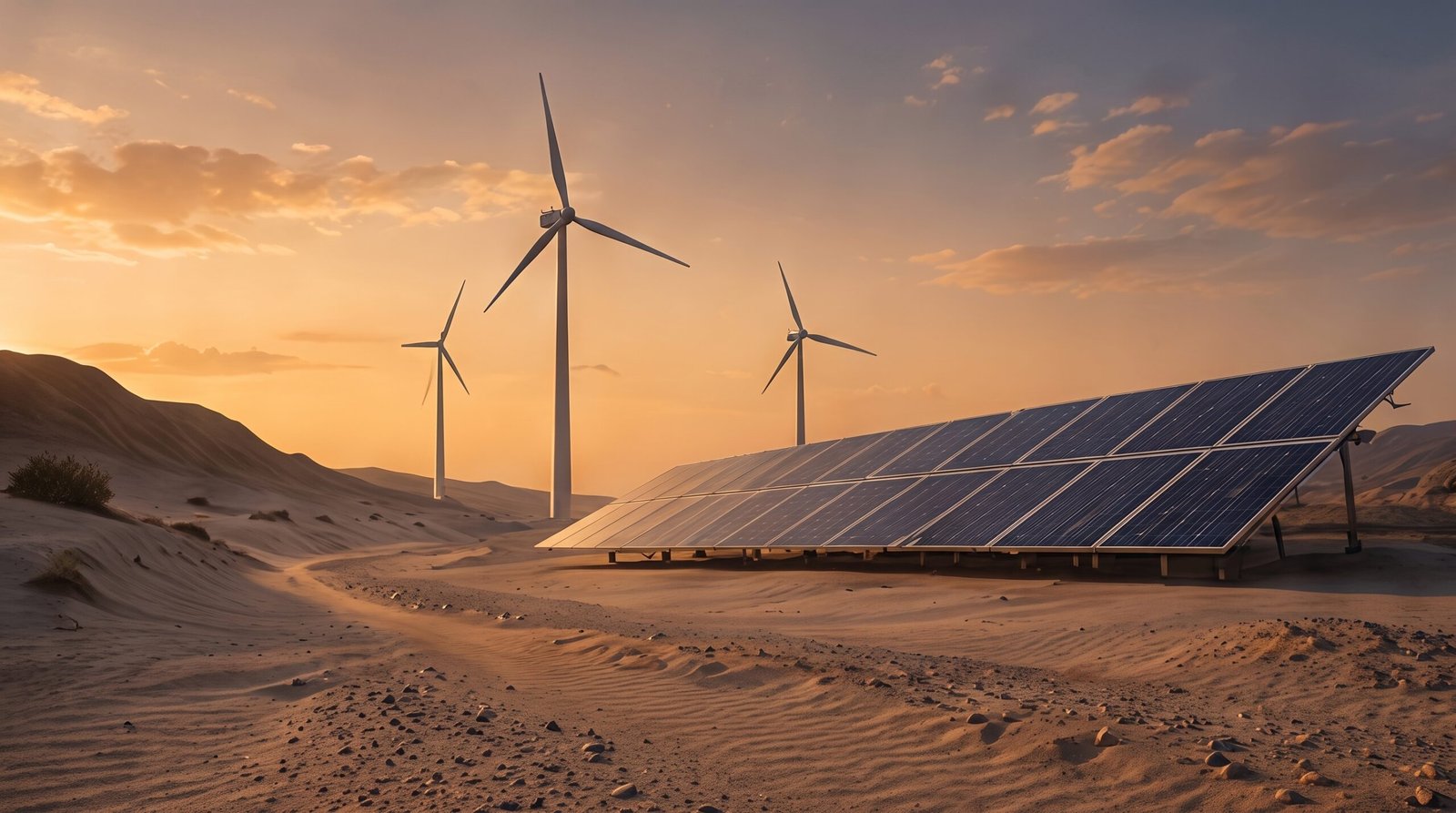
“Saudi Arabia’s future will not be defined only by the oil it has sold, but by what it builds with the wealth and ambition that oil created.”
For too long, Saudi Arabia has been viewed in the West through a narrow and outdated lens: oil, desert, conservatism and geopolitical power. That image is no longer enough. While oil remains part of the Kingdom’s economic story, it does not explain the scale of transformation now taking place under Vision 2030. Saudi Arabia is not simply trying to modernise its image; it is attempting to reshape its economy, environment, investment model and global identity.
The most important shift is this: Saudi Arabia is using the wealth, infrastructure and influence created by oil to build a broader future. That future includes renewable energy, green hydrogen, carbon capture, conservation, tourism, technology, logistics, sustainable cities and green finance. For Western audiences, this should challenge an old assumption. The Kingdom is not a static, oil-dependent state standing outside the future. It is actively trying to position itself as a global investment powerhouse and a serious participant in the next phase of the energy transition.
Vision 2030: A national transformation strategy
Saudi Arabia’s Vision 2030 is the foundation of this transformation. It is not a small environmental policy or a marketing slogan. It is a national strategy designed to diversify the economy, attract investment, improve quality of life and reduce dependence on oil revenues. One of the official pillars of Vision 2030 is the Kingdom’s ambition to become a “global investment powerhouse” [1]. That phrase is important because it shows how Saudi Arabia sees its future: not only as an energy supplier, but as a centre of capital, infrastructure, innovation and strategic investment.
This is where Saudi Arabia’s approach differs from many Western countries. In the West, climate and energy policy is often fragmented by short election cycles, local planning disputes, party-political conflict and changing regulations. Saudi Arabia’s model is more centralised and more integrated. Vision 2030 links sustainability with economic diversification, tourism, infrastructure, technology, investment and national identity. This gives the Kingdom a clear direction: it is not treating the green transition as an isolated environmental issue, but as part of a complete national reinvention.
Saudi Arabia’s investment strategy supports this direction. The National Investment Strategy aims to increase the quality and scale of investment in the Kingdom and identifies priority sectors including green energy, technology, healthcare, advanced mobility and start-ups [2]. This matters because sustainability is not being presented as a sacrifice. It is being positioned as a future growth sector.
Turning oil-era wealth into future industries
It would be unrealistic to pretend that Saudi Arabia’s oil past no longer matters. But the stronger point is that the Kingdom is trying to convert oil-era wealth into future industries. This is a more persuasive argument than claiming Saudi Arabia has already completed the green transition. The real story is that Saudi Arabia is using its existing strengths — capital, energy expertise, land, sunlight, infrastructure and strategic location — to build the foundations of a more diversified economy.
This is why the “oil country” label is increasingly incomplete. Saudi Arabia is not abandoning energy leadership; it is redefining what energy leadership could mean in a changing world. In the twentieth century, energy leadership meant oil production and export capacity. In the twenty-first century, it may also mean renewable power, green hydrogen, carbon management, battery storage, green finance and sustainable infrastructure. Saudi Arabia wants to be part of that future.
This ambition is already attracting international attention. Reuters reported that Saudi Arabia’s investment minister said 85% of Vision 2030 goals were completed or on track by the end of 2024, while also acknowledging that some major projects have faced delays and recalibration [3]. Even with those challenges, the direction of travel is clear: Saudi Arabia is no longer only defending its old economic model; it is building new ones.
Renewable energy: visible proof of change
Renewable energy is one of the clearest signs of the Kingdom’s transformation. Through the Saudi Green Initiative, Saudi Arabia has set out a target to optimise its energy mix and generate a major share of its power from renewables by 2030. The Saudi Green Initiative reports that 12.3 GW of renewable energy capacity is connected to the grid, 44.2 GW is under development and 63.8 GW is to be tendered by 2030 [4].
This is significant because Saudi Arabia is starting from a historically fossil-fuel-heavy power system. Western countries such as the UK and Germany currently have much higher renewable-electricity shares; the UK generated 50.8% of its electricity from renewables in 2024, while Germany’s renewable share also exceeded 50% in recent official and institutional reporting [5]. However, that does not weaken Saudi Arabia’s story. It clarifies it. Saudi Arabia should not be judged as if it were an older European renewable market. It should be judged as a major hydrocarbon economy attempting a rapid national-scale shift.
That is the more powerful comparison. Some Western countries may currently be ahead in renewable generation, but Saudi Arabia is building a transformation from a much more oil-linked starting point. Its advantage lies in the scale of its ambition, the clarity of its national strategy and the speed at which it is trying to build new capacity. The message is not that Saudi Arabia has already overtaken the West in renewable electricity. The message is that a country long seen as inseparable from oil is now making renewable energy a pillar of national development.
Green hydrogen: the next export story
If oil made Saudi Arabia central to the twentieth-century energy system, green hydrogen could help keep it central to the twenty-first-century energy transition. This is one of the most important parts of the Kingdom’s future-facing narrative.
The NEOM Green Hydrogen Project is a flagship example. Air Products describes the project as a major green hydrogen complex that will produce up to 600 tonnes per day of carbon-free hydrogen in the form of green ammonia for export. As of March 2026, the project reported 90% overall construction completion, with its renewable-power assets targeted for completion by mid-2026 and first green-ammonia availability planned for 2027 [6]. German company thyssenkrupp Nucera has also been contracted to supply a more than 2 GW electrolysis plant for the project [7]. This is not a minor pilot scheme. It is an attempt to build one of the largest green hydrogen projects in the world.
The strategic logic is clear. Saudi Arabia became globally important because it supplied energy to the world. In a decarbonising world, it wants to remain an energy supplier through cleaner fuels. Green hydrogen and green ammonia could allow Saudi Arabia to export clean energy to markets in Europe and Asia. While the global hydrogen market is still developing and commercial risks remain, the ambition itself is powerful. Saudi Arabia is not waiting passively for the energy transition to happen; it is trying to shape its place within it.
The Saudi Green Initiative: sustainability beyond power generation
Saudi Arabia’s green transformation is not only about solar farms and hydrogen plants. The Saudi Green Initiative also includes land restoration, tree planting, biodiversity protection and emissions reduction. This is important because it challenges another Western assumption: that Saudi Arabia’s environmental agenda is only about protecting its oil economy.
The Saudi Green Initiative reports investment across dozens of initiatives, covering emissions reduction, renewable energy, conservation and environmental restoration [8]. It has also reported that more than 100 million trees and shrubs have been planted since the launch of the initiative in 2021, while 18.1% of Saudi Arabia’s land and 6.49% of its marine environments are under protection, covering nearly 400,000 km² [9]. More recently, Saudi Arabia’s Ministry of Environment, Water and Agriculture announced that the Kingdom had restored its first one million hectares of degraded land and planted more than 159 million trees [10].
These figures matter because they show environmental progress beyond energy policy. Saudi Arabia is not only trying to change how it produces electricity. It is also trying to restore landscapes, protect biodiversity, combat desertification and improve quality of life. For a desert country facing heat, water scarcity and land degradation, these are not symbolic issues. They are central to national resilience.
International companies are already involved
One of the strongest ways to demonstrate credibility to a Western audience is to show that international companies are already participating in the Kingdom’s transformation. Saudi Arabia’s green agenda is not being developed in isolation.
International participation is visible across several sectors. Air Products, ACWA Power and NEOM are partners in the NEOM Green Hydrogen Company [6]. Aramco has partnered with Linde and SLB to develop the Jubail carbon capture and storage hub [11]. TotalEnergies and EDF have secured major Saudi solar projects [12]. ACWA Power has also signed agreements with European companies—including Edison, TotalEnergies and EnBW—to assess renewable-electricity exports to Europe, while Siemens Energy is among the companies involved in related transmission-corridor discussions [13]. Separately, DNV’s independent assessment found that PIF’s Green Finance Framework aligned with recognised green-bond and green-loan principles [14].
The world is not merely observing Saudi Arabia’s transformation; many respected global companies and institutions are already helping to deliver parts of it. That involvement gives the Kingdom’s green strategy a level of commercial and technical credibility that cannot be dismissed as domestic publicity.
Saudi Arabia compared with the Gulf and the West
Within the Gulf, Saudi Arabia stands out for the scale of its transformation. The UAE is a mature regional clean-energy player with a strong international profile through Masdar, while its updated Energy Strategy 2050 aims to triple renewable energy’s contribution and mobilise AED 150–200 billion in investment by 2030 [15]. Oman is advancing a national green-hydrogen programme through Hydrom, including competitive land auctions and large-scale projects intended to support production and export from 2030 onwards [16]. Qatar’s National Renewable Energy Strategy targets 4 GW of utility-scale renewable capacity and 200 MW of distributed generation, raising renewables’ share of its electricity mix from 5% to 18% by 2030 [17].
These regional developments are important, but Saudi Arabia’s strength lies in scale. It has the largest economy in the Gulf, a major sovereign wealth fund, significant land and solar potential, and a national transformation programme that connects energy, investment, tourism, logistics, industry, conservation and quality of life. The UAE may be more mature in some clean-energy branding, and Oman is highly active in hydrogen, but Saudi Arabia’s Vision 2030 gives it one of the broadest and most ambitious transformation platforms in the region.
Compared with Western countries, the argument must be made carefully. Saudi Arabia is not currently ahead of countries such as the UK or Germany in renewable-electricity generation. Those countries have older renewable sectors and higher current renewable shares. But Saudi Arabia can be compared favourably on strategic unity. Many Western governments struggle with fragmented delivery, planning delays, grid constraints and political reversals. Saudi Arabia’s advantage is that its green agenda is tied to a single national development vision, backed by state investment and linked to wider economic reform.
This is the more persuasive claim: Saudi Arabia may not yet be greener than the West in current electricity data, but its transformation vision is arguably more integrated than many Western approaches.
Why the West should look again
Western audiences should not dismiss Saudi Arabia’s progress because of old assumptions. The West needs reliable partners in energy security, investment, clean technology, infrastructure, climate adaptation and future fuels. A successful Saudi transformation could benefit not only the Kingdom, but also global markets.
Saudi Arabia’s location between Europe, Asia and Africa gives it strategic importance. Its investment capacity gives it influence. Its sunlight and land give it renewable potential. Its energy experience gives it industrial knowledge. Its Vision 2030 framework gives it direction. Together, these assets make the Kingdom more than an oil producer. They make it a potential partner in the next stage of global energy and investment.
Of course, scepticism will remain. Saudi Arabia is still a major oil producer, and its green transition is not complete. But scepticism should not become lazy dismissal. The better question is not whether Saudi Arabia has an oil past, it does. The better question is what the Kingdom is building with the wealth, influence and infrastructure that oil created.
Conclusion
Saudi Arabia’s future will not be defined only by the oil it has sold, but by what it builds with the wealth and ambition that oil created. The Kingdom’s transformation is not complete, but it is real, visible and increasingly difficult to ignore. Through Vision 2030, renewable energy, green hydrogen, conservation, carbon management, international partnerships and green finance, Saudi Arabia is presenting itself as a future-facing investment powerhouse.
For Western audiences, the old image of Saudi Arabia as a country defined almost entirely by oil is no longer sufficient. A new Saudi Arabia is emerging: more strategic, more open, more ambitious and more determined to shape its place in the future global economy. The West should not view this transformation through outdated stereotypes. It should look again and take it seriously.
Sources and Further Reading
1. Saudi Vision 2030, Vision 2030 Overview: A Global Investment Powerhouse.
2. Invest Saudi, Saudi Arabia’s National Investment Strategy.
3. Reuters, Saudi Arabia’s Vision 2030 Goals 85% Complete, Minister Says, 26 October 2025.
4. Saudi Green Initiative, Reducing Carbon Emissions.
5. UK Department for Energy Security and Net Zero, Digest of United Kingdom Energy Statistics 2025; Destatis, Electricity Generation in 2024: 59.4% from Renewable Energy Sources, 12 March 2025.
6. NEOM Green Hydrogen Company, World’s Largest Green Hydrogen Plant Achieves 90% Overall Construction Completion Across All Sites, 26 March 2026.
7. Thyssenkrupp Nucera, Contract to Install More Than 2 GW Electrolysis Plant for Air Products in NEOM.
8. Saudi Green Initiative, Information About the Saudi Green Initiative; and Saudi Arabia Advances Climate Action at the 2024 SGI Forum, 3 December 2024.
9. Saudi Ministry of Environment, Water and Agriculture, Saudi Arabia Restores Its First One Million Hectares of Degraded Land, March 2026.
10. Saudi Green Initiative, Saudi Arabia Advances Climate Action at the 2024 SGI Forum: Protecting Land and Sea, 3 December 2024.
11. Saudi Aramco, Aramco, Linde and SLB Sign Shareholders’ Agreement for One of the Largest CCS Hubs Globally, 4 December 2024.
12. TotalEnergies, Saudi Arabia: TotalEnergies and Aljomaih Energy & Water Company Awarded 300 MW Solar Project, 3 December 2024; EDF Renewables, Two Solar IPP Projects Won by EDF Renewables, 6 December 2024.
13. Saudi Ministry of Energy, Saudi Arabia Solidifies International Partnerships to Export Renewable Energy and Green Hydrogen to Europe, 20 July 2025.
14. Public Investment Fund, Green Finance Framework and DNV Second Party Opinion, August 2024.
15. United Arab Emirates Government, UAE Energy Strategy 2050.
16. Hydrogen Oman, Oman Green Hydrogen Strategy and Round Three Green Hydrogen Auctions.
17. Qatar General Electricity and Water Corporation, Qatar National Renewable Energy Strategy.